

Out-of-network dental claims are tricky. Every insurance company plays by its own rules, and those rules aren’t always clear. If you’re not careful, these claims can slow down payments and create confusion for both your team and your patients.
Solid dental billing management helps you stay ahead of these issues. Without it, your staff ends up spending hours fixing problems that should’ve been avoided in the first place. Dynamic Dental Solutions takes that pressure off your team, allowing your practice to run more smoothly and get paid faster.
This blog breaks down real strategies for handling out-of-network claims the smart way.
Read on to see how billing professionals can help your practice collect more and stress less.
Key Takeaways
- Out-of-network dental claims aren’t impossible to manage, but the right strategy can make or break your revenue.
- Most billing mistakes stem from guessing what insurers want, rather than knowing how to provide them with exactly what they ask for.
- Hiring professionals to handle complex claims can free up your team, improve cash flow, and alleviate the stress of chasing payments.

Know Exactly What the Patient’s Plan Will Pay
Insurance plans all follow different rules, especially when the provider is out-of-network. You can’t rely on guesswork if you want to get paid correctly. Getting clear answers upfront helps your team stay in control.
Professional billing teams communicate directly with insurance companies before treatment initiation. They gather important details, such as the extent of coverage, whether pre-approvals are required, and the caps on fees. This upfront work helps you avoid surprises and keep billing clean.
When you know what to expect, it’s easier to talk with patients about their costs. You avoid confusion that leads to delays or missed payments. Your office stays focused on care instead of chasing down unpaid claims.
Using Carrier-Specific Language in Narratives
Insurance companies don’t read claims like people do. They rely on systems that scan for specific words and flag anything that doesn’t fit their format. If your notes seem too vague or use incorrect terms, your claim may be rejected or denied.
That’s where experienced billing teams make a big difference. They understand how each carrier operates and adjust the language in your narratives to match. Using the right terms in the right places helps your claims move through without extra review.
These small changes add up. Clear, carrier-friendly documentation gets approved faster and with fewer back-and-forth delays. Your team spends less time rewriting claims and more time focusing on patient care.
Why Do Out-of-Network Dental Claims Get Denied?
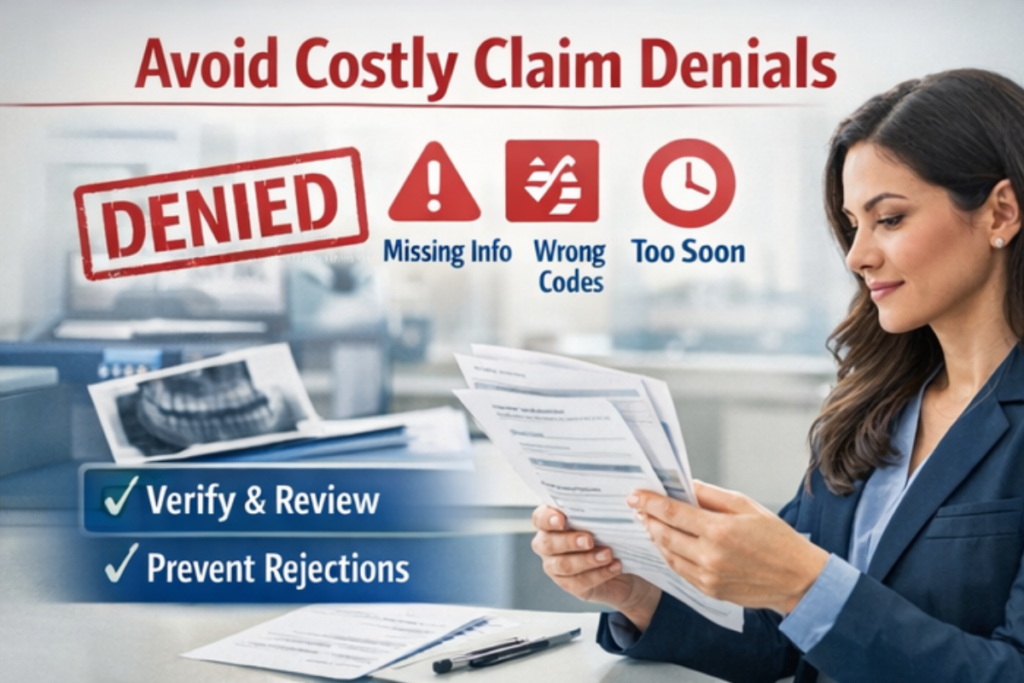
Most out-of-network dental claims get denied because something important was missing. Incomplete paperwork, wrong codes, or skipped steps during insurance checks are often to blame. When the details aren’t right, insurers push the claim back instead of paying it.
Professional dental billing management helps avoid these mistakes before they happen. Experienced billers understand what each insurer requires and ensure the claim is complete before it’s sent. This reduces delays and helps your practice collect without extra stress.
Need help turning more claims into payments? Hire the dental billing experts at Dynamic Dental Solutions.
Map Out Frequency Limitations Before You Bill
Out-of-network dental claims are often denied when procedures are billed too closely together. Every insurer sets its own rules for how often services like exams, cleanings, or X-rays can be covered, and those limits aren’t always easy to find.
Understand the Insurer’s Specific Timeframes
Each carrier has different rules about how often services are allowed. Some base it on calendar year, while others use a rolling timeframe that resets based on the last date of service. Knowing the difference prevents wasted time and rejected claims.
Use Claim History to Avoid Repeat Errors
Tracking claim history helps you avoid submitting procedures too early. Billing experts review past submissions to ensure each new claim falls within the approved window. This protects your revenue and keeps your records clean.
Plan Patient Visits Around Eligibility
When you know what benefits are available and when, it’s easier to schedule visits that get approved. Patients appreciate clear answers about when services will be covered again. It also helps your team avoid uncomfortable conversations after the fact.
Avoid Unnecessary Appeals and Delays
Appealing denied claims costs time and often ends in frustration. Avoiding the issue altogether with proper planning saves everyone stress. A billing partner helps you catch timing issues before they become a problem.
Pre-Treatment Estimates Are About Leverage, Not Just Information
Sending pre-treatment estimates gives your practice more than just a rough number. It opens the door to see what insurance might block before you provide care. That heads-up can save you from denied claims and last-minute billing surprises.
These estimates also give your office proof of what was shared with the insurer. If a claim is denied later, you have their original response to support your appeal. This record strengthens your case and keeps the process moving.
Billing pros know how to word and structure these submissions so they don’t get ignored or returned with useless responses. Instead of vague disclaimers, you get real numbers and clear rules. That clarity helps your team plan better and avoid second-guessing what’s covered.
Know When to Push Back on Low Reimbursements
Some insurance payments come in much lower than expected, even when the procedure was done correctly. It’s not always a mistake. Sometimes, payers rely on busy offices accepting underpayments without questioning them.
Billing teams trained in appeals know when the numbers don’t add up. They review fee schedules, spot gaps, and check how similar claims were handled. If the payout falls short, they take immediate steps to challenge it.
Appealing low payments takes more than frustration. It takes solid records and a clear case. With that in place, your office has a better shot at getting paid what it earned.
Balance Billing Isn’t Always an Option
Charging patients the leftover balance sounds straightforward, but insurance plans don’t always allow it. Some restrict what you can collect, even if you’re out-of-network. Missing those limits could land your practice in a tough spot.
Federal laws, especially with ERISA-based plans, often supersede your standard billing approach. These plans can help block extra charges to protect patients, and state rules may support this approach. If your office skips this step, you risk breaking compliance rules without knowing it.
Billing teams that understand these fine-print limits help you stay protected. They review each plan and flag restrictions early, so you don’t send out a bill you can’t enforce. That kind of insight keeps you ahead of problems and keeps billing clear.
Layer the Claim With Strong Supporting Attachments
Claims for higher-cost treatments often face more scrutiny. Insurers want clear evidence that the procedure was medically necessary, not elective. Without solid proof, even a valid claim can get delayed or denied.
Here are the attachments that help build a strong case for approval:
- Detailed chart notes: These explain the patient’s condition and support the reason for treatment. They help reviewers understand the full clinical picture.
- X-rays or diagnostic images: Visuals back up the diagnosis and show what can’t be explained in writing alone. When paired with notes, they confirm the need for care.
- Perio charting or measurements: These show gum health and disease severity. This is especially important for scaling, root planing, or surgery claims.
- Clear procedure narratives: A short, direct explanation tells the insurer why the treatment was needed. Billing pros know how to use language that avoids red flags.
Putting the right records in the right format gives your practice an edge. Dental billing management connects all the pieces so claims are stronger from the start.
Track Denial Trends by Procedure and Carrier
Claim denials often follow patterns. Certain payers tend to reject specific procedures more often, and those trends don’t happen by accident. If your team isn’t tracking these issues, they’ll miss the chance to fix them.
Billing professionals use data tools to sort denials by code and insurance provider. That makes it easier to spot where documentation is falling short or where carriers are tightening standards. These insights help your office adjust its billing and submission processes.
Once you know what each payer tends to push back on, you can fine-tune how your claims are prepared. Stronger documentation, better timing, or different wording can shift the outcome. Over time, your approval rate improves, and the billing process runs smoother.
How Can I Get Paid Faster for Out-of-Network Claims?
Every step in the claim process affects how quickly you get paid. If the claim is clear, correct, and complete when it goes out, there’s less chance of delay. A well-organized submission often progresses smoothly through review without being flagged.
Billing experts take time to check for coding problems or missing details before hitting send. They also follow a set schedule for checking in with insurers based on how each one usually operates. That kind of structure helps keep the timeline tight.
Some payers need more reminders than others. Knowing when and how to follow up can shave days or even weeks off the wait. A faster process starts with smart billing habits from the start.
Don’t Waste Time Resubmitting Ineligible Claims
Submitting claims without verifying coverage can result in lost time and unpaid work. If the patient’s plan isn’t active, no amount of coding will fix the denial. That kind of mistake drains your team’s energy and slows down your revenue.
Before any claim is built, billing experts confirm whether the plan is active. They review real-time eligibility and identify issues that could block payment later. Your team can then focus on claims that are worth submitting.
Helping patients understand these limits also matters. When coverage isn’t available, clear communication prevents confusion or frustration. It also builds trust by showing your office has done its homework.
Follow Up With Insurers Using the Right Language
Claim delays often come down to how follow-ups are handled. Dental billing experts take a focused approach that gets attention and speeds up resolution.
Include All the Right Claim Information
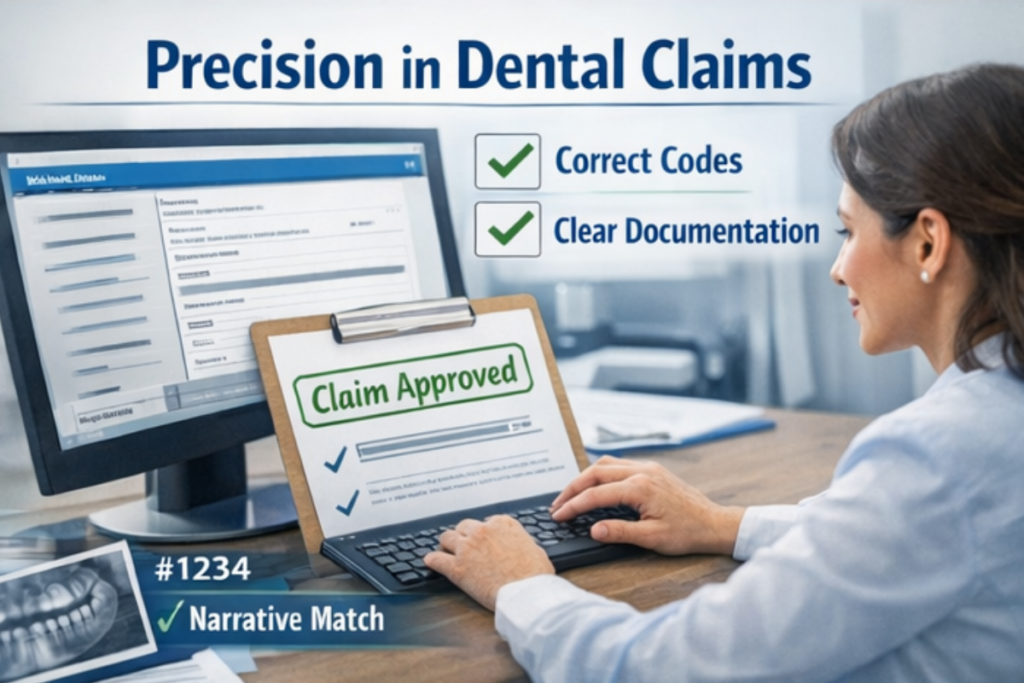
Billing professionals always lead with exact details like claim ID, date of service, and billing codes. This helps the insurer locate the file quickly without requiring back-and-forth communication. The faster the claim is located, the faster it moves forward.
Use the Correct Process for Escalation
Each insurer has a process for when a stalled claim needs a higher-level review. Billing teams understand those steps and follow them exactly as outlined. That avoids wasted time and keeps the claim from going in circles.
Mirror the Insurer’s Language
Billing experts respond using the same codes and denial terms the insurer used. This makes the appeal or follow-up easier to understand and review. It also shows the insurer that your team knows their system and expects a fair response.
Every word matters in a follow-up. Dental billing teams use the right language to move claims out of limbo and into payment.
Ready to Outsource Your Dental Billing Management?
Handling out-of-network claims doesn’t have to feel like a gamble. With the right systems and the right team backing you up, your practice can collect what it’s owed without burning out your staff. Dynamic Dental Solutions provides you with the tools and support to streamline your operations and get paid faster.
Frequently Asked Questions
How do dental billing professionals reduce out-of-network claim delays?
Professional billers submit claims with the correct codes, attachments, and payer-specific formats from the start. This approach cuts down rework, shortens processing time, and keeps payments moving instead of sitting in limbo.
What documents do billing experts include with out-of-network dental claims?
Billing professionals are familiar with the specific clinical notes, narratives, and images that each insurer requires. They include only what supports approval, which helps claims move forward instead of getting flagged or denied.
Is balance billing handled better through outsourced dental billing?
Yes, because billing professionals understand plan rules and state guidelines before any statement goes out. This protects your practice from compliance issues while keeping patient communication clear and consistent.
Why do outsourced billing teams see fewer out-of-network claim denials?
They verify eligibility, review coding, and double-check documentation before submission. This extra layer of review stops common mistakes that in-house teams often miss under pressure.
When does outsourcing out-of-network dental billing make sense for a practice?
Outsourcing makes sense once billing work starts to pull staff away from patient care or slow cash flow. Professional support brings structure, follow-through, and better results without adding stress to your team.



Pingback: itemprop="name">3 Signs Your Dental Practice Needs Credentialing Help - Dynamic Dental Solutions
Pingback: itemprop="name">Staying Ahead Of Insurance Policy Changes With Expert Dental Billing Services - Dynamic Dental Solutions